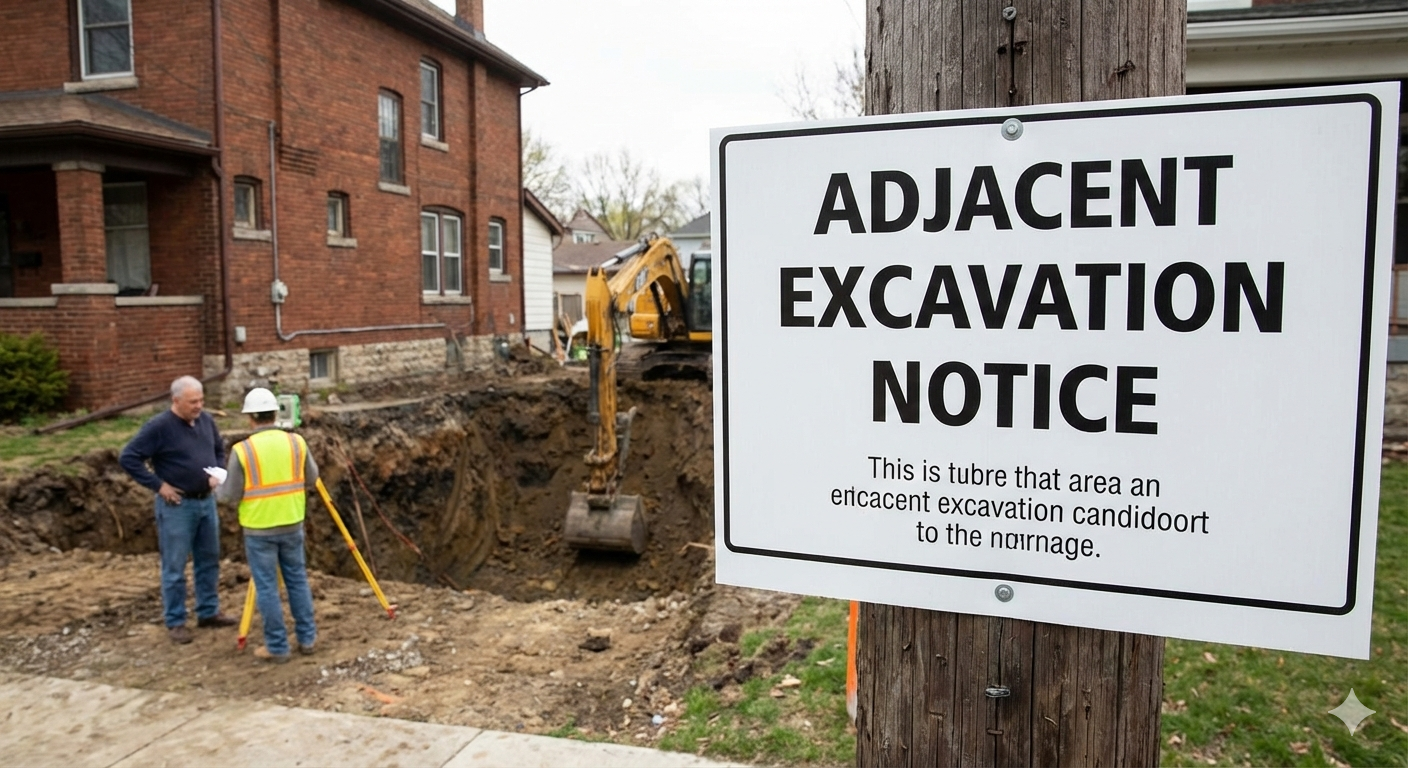
Adjacent excavation refers to any digging activity close to a neighbouring property, most commonly for laying foundations—whether for new buildings or underpinning existing structures. It can also include excavation for drains or lowering ground levels for landscaping.
Understanding how the Party Wall etc. Act 1996 applies to adjacent excavation is crucial to avoid disputes and comply with legal requirements.
Section 6(1): Excavation Within 3 Metres of a Neighbour
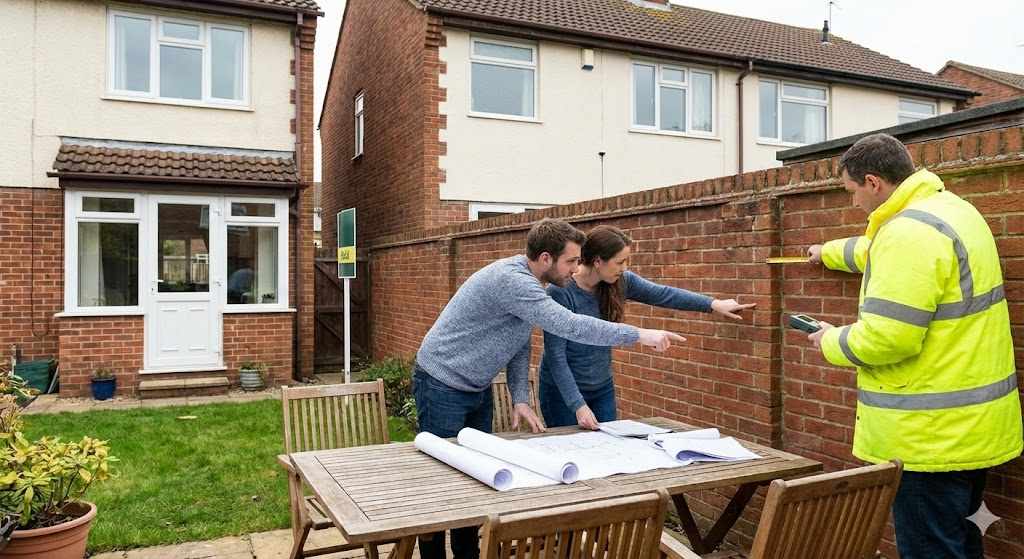
Under Section 6(1) of the Act, if you plan to dig within 3 metres of an adjoining owner’s property and your excavation is deeper than your neighbour’s existing foundation, you must serve a Party Wall Notice. A party wall surveyor can help prepare the notice and advise on party wall notice cost.
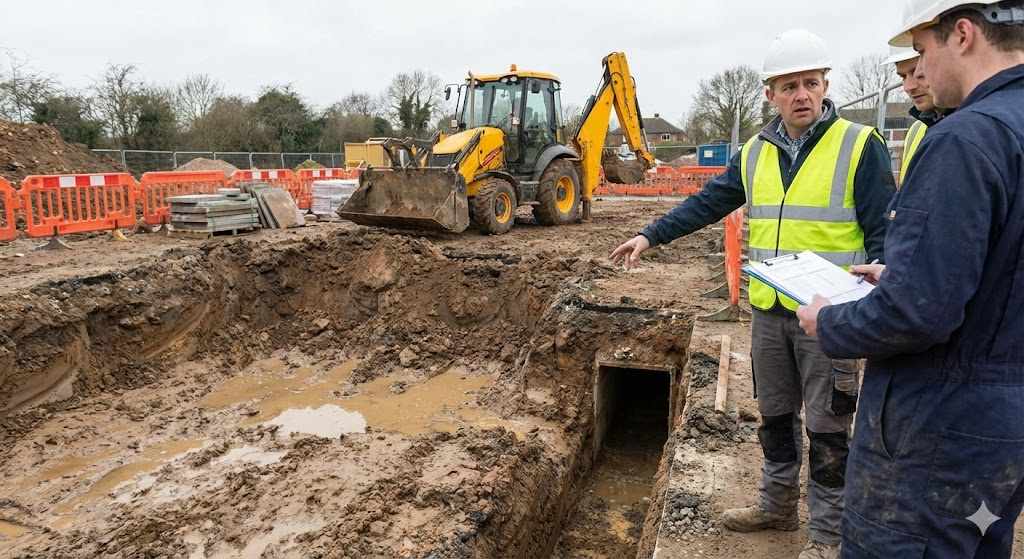
For example, imagine a building owner digging a new strip foundation (a simple trench filled with concrete). The neighbour’s property may have a shallow foundation typical of Victorian or older homes—often a brick spreader footing or a shallow concrete base.
Modern foundations are usually at least 1 metre deep, depending on soil and tree roots. If your new foundation extends below the neighbour’s and is within 3 metres of their structure—including garden walls, solid studios, or garages—you must notify them under this section.
Continue Reading: Adjacent Excavation and the Party Wall Act: What You Need to Know








Write a comment ...